In this article 9 sections
- 1Why Winter Is Hard on Pavers in Colorado Springs
- 2How to Shovel and Plow Pavers Without Damaging Them
- 3Which Ice Melt Is Safe for Pavers?
- 4How to Use Ice Melt Safely on Pavers
- 5Ice Melt and Pavers: Common Mistakes
- 6Other Ways to Reduce Ice on Pavers
- 7Signs Your Pavers Need Attention After Winter
- 8Frequently Asked Questions
- 9Get Your Pavers Ready for Winter
Quick answerThe ice melt safe for pavers, according to concrete paver industry guidance, is plain rock salt (sodium chloride) used sparingly, with calcium chloride only when it is too cold for salt to work. Magnesium chloride and CMA blends are not recommended. Shovel first, salt only the ice, and sweep up the leftovers in spring.
Pavers handle Colorado Springs winters well when they are installed right, but snow removal is where a lot of avoidable damage happens. Metal blades catch paver edges, piles of salty snow sit on the patio for weeks, and the wrong ice melt slowly eats at the surface. This guide covers how to shovel and plow pavers, which deicers to use and which to avoid, and how to get your patio, walkway or driveway through to spring in good shape.
Why Winter Is Hard on Pavers in Colorado Springs
Our winters are less about deep, steady cold and more about constant swings. Snow falls, the sun comes out, meltwater runs across the pavers and into the joints, and it freezes again that night. That cycle repeats dozens of times a season. Water in the joint sand and base freezes and expands, ice forms on shaded walks, and homeowners reach for ice melt again and again. The same pattern affects all your masonry, which is why our guide to winter masonry care in Colorado Springs leans so heavily on keeping water moving.
Concrete pavers are dense and strong, so they hold up to this better than many surfaces. The goal in winter is simply not to add extra damage with the shovel, the plow or the bag of ice melt.
How to Shovel and Plow Pavers Without Damaging Them
You can clear pavers with a shovel, snow blower or plow, the same as any other pavement. A few habits make a big difference:
- Shovel early and often. Removing snow before it is packed down or turns to ice means you need little or no ice melt.
- Use a plastic shovel or a blade with a plastic or rubber edge. Metal edges scratch the surface and leave rust marks.
- Push diagonally to the joints. The Concrete Masonry and Hardscapes Association maintenance guide notes that shoveling and plowing at an angle to the joints is easier and keeps the blade from catching paver edges.
- Set snow blowers and plows a little high. Adjust the skid shoes so the blade rides just above the surface. Worn metal shoes can leave filings that rust-stain pavers.
- Fix lifted pavers before winter. A paver sticking up even slightly is the one a blade will catch and chip.
- Do not pile snow on the patio. Push it onto the lawn or a bed that can take it, away from the house and walls.
Which Ice Melt Is Safe for Pavers?
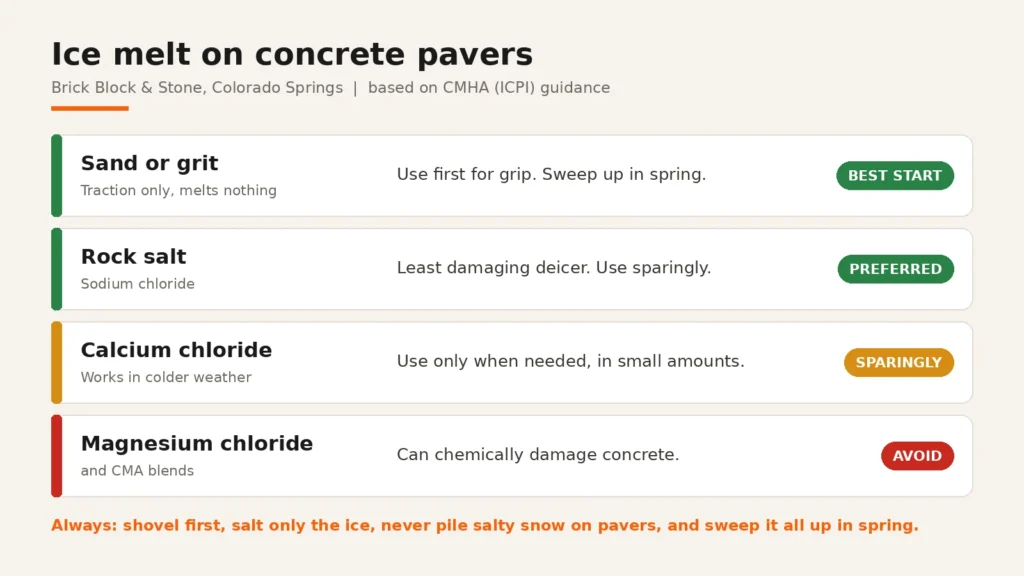
This is where advice gets confusing, because product labels and some websites disagree. The guidance from the Concrete Masonry and Hardscapes Association (the industry group formerly known as ICPI) is clear, and it is based on research into how deicers affect concrete:
Rock salt (sodium chloride): the preferred choice
The association’s FAQ on deicing chemicals and pavers lists sodium chloride as the least damaging deicer for concrete pavers and recommends using it whenever possible. It works best when temperatures are not far below freezing, which covers many of our sunny winter afternoons. The catch is that it can hurt grass, shrubs and nearby metal, so use only as much as you need.
Calcium chloride: for the colder days, in small amounts
Calcium chloride keeps working at lower temperatures than rock salt and acts faster. The association says it can be used judiciously when you need that extra power, but it is harder on concrete than rock salt, so it should not be your everyday choice.
Magnesium chloride and CMA: not recommended
Many bags marketed as gentle or pet friendly contain magnesium chloride or calcium magnesium acetate (CMA). The association does not recommend either for concrete pavers, because they can chemically degrade concrete, and the risk goes up with the magnesium content. Read the ingredient list, not just the front of the bag.
Sand and grit: traction without melting
Sand or fine grit gives you footing on ice without any chemical effect, and it can help keep joints topped up. Spread it first, then add ice melt only where you still need it. Sweep the excess off in spring, because grit left on pavers for years wears the surface. Do not use sand on permeable pavers, since it clogs the joints that let water drain.
Check your paver manufacturer, too
Some paver manufacturers publish their own winter care advice, and it does not always match. If you know the brand of your pavers, check their recommendations and follow them for warranty reasons. If you do not know the brand, the association’s guidance above is a sound default.
How to Use Ice Melt Safely on Pavers
Even the right product causes problems when it is overused. Follow these rules from the industry guidance:
- Shovel first. Ice melt is for ice, not for melting snow you could have shoveled.
- Use the smallest amount that works. Follow the dosage on the bag. More does not melt faster, it just leaves more chemical behind.
- Spread it evenly. Use a hand spreader or a cup, not a heavy pour in one spot.
- Clear the slush. Once ice loosens, shovel it off along with the extra salt so the chemical does not build up in one place.
- Keep it off plants and metal. Watch the edges near lawns, shrub beds, railings and car doors.
- Do not store salty snow or bags on the pavers. Piles that melt slowly soak the same area for weeks.
- Sweep up in spring. Clear away leftover grit and deicer once the season is over, and top up joint sand where it has washed out.
Ice Melt and Pavers: Common Mistakes
- Pouring ice melt on fresh snow instead of shoveling.
- Choosing a bag for its “safe” label without checking the ingredients.
- Using a metal-edged shovel or a plow set too low.
- Leaving a big pile of plowed, salty snow on the driveway apron all winter.
- Pressure washing joints in winter, which blows out the sand and lets water into the base.
- Ignoring a sunken or heaved section until spring, when it has collected ice all season.
Other Ways to Reduce Ice on Pavers
A few longer-term steps mean less ice to deal with in the first place:
- Fix drainage. Extend downspouts so they do not drain across walks and patios, and make sure the pavers slope away from the house.
- Keep joints full. Full, firm joint sand sheds water better than half-empty joints. Some homeowners also use joint stabilizers or sealers to reduce how much water gets into the sand.
- Repair low spots. Sunken pavers hold puddles that freeze into ice patches. Our guide to paver patio repair covers how those are fixed.
- Consider snow melt for steep or shaded areas. Heated systems can be installed under pavers during a new installation or a full rebuild, which removes the need for ice melt altogether.
Signs Your Pavers Need Attention After Winter
Walk the patio, path or driveway once the snow is gone and look for:
- Pavers that have lifted, sunk or rocked loose.
- Chipped edges along the paths you plowed or shoveled.
- Rust stains from shovel blades or plow shoes.
- Surface scaling or a rough, worn look in the areas that got the most ice melt.
- Joints that have lost sand or grown weeds.
- Puddles that sit after rain, which point to settling in the base.
Most of these are straightforward to fix when caught early. Lifted or sunken pavers can be pulled, the base corrected, and the same pavers relaid. If you are planning new pavers, the base depth, slope and edge restraint built in at installation are what help a patio get through winter.
Frequently Asked Questions
Is rock salt bad for pavers?
Not when used sparingly. Concrete paver industry guidance lists rock salt (sodium chloride) as the least damaging deicer and the preferred choice. The problems come from overuse and from leaving salty slush or piles sitting on the pavers. Shovel first, use a light, even amount on ice only, and clear the slush once it loosens.
Is magnesium chloride safe for pavers?
The Concrete Masonry and Hardscapes Association does not recommend magnesium chloride or calcium magnesium acetate for concrete pavers, because they can chemically degrade concrete. Many products sold as gentle contain these ingredients, so read the label. If your paver manufacturer gives different advice, follow theirs for warranty reasons.
What is the best shovel for pavers?
A plastic shovel or one with a plastic or rubber edge is best, because metal edges scratch pavers and can leave rust stains. Push the shovel at an angle to the joints rather than straight along them, so the blade does not catch the edges of individual pavers. Shovel early, before snow packs down into ice.
Can I use sand on pavers in winter?
Yes, on standard pavers. Sand or fine grit gives traction without any chemical effect and can help keep joints filled. Sweep the excess off in spring so it does not wear the surface. Do not put sand on permeable pavers, because it clogs the open joints that let water drain through.
Can I use a snow blower on a paver driveway?
Yes. Adjust the skid shoes so the auger housing rides slightly above the pavers rather than scraping them, and check that worn metal shoes are not leaving filings that can rust-stain the surface. Fix any lifted pavers before winter, since a raised edge is easy for a blade to catch and chip.
Get Your Pavers Ready for Winter
A few minutes of the right snow removal and the right ice melt keeps pavers looking good for years. If your pavers have lifted, sunk or started to chip, Brick Block & Stone has 40+ years of masonry experience and offers free written estimates. Contact us or call 719-723-1081.

Brick Block & Stone is a masonry contractor in Colorado Springs with more than 40 years of experience in brick, block, stone, pavers and retaining walls. Questions about your own project? Call 719-723-1081 or send us a message.
