In this article 10 sections
- 1What Tuckpointing Means
- 2Signs Your Brick Needs Tuckpointing in Colorado Springs
- 3Why Mortar Wears Out Faster Here
- 4The Tuckpointing Process, Step by Step
- 5Tuckpointing in Colorado Springs Weather: When to Do It
- 6Can You Tuckpoint Brick Yourself?
- 7What Affects Tuckpointing Cost in Colorado Springs
- 8How Long Tuckpointing Lasts
- 9Frequently Asked Questions
- 10Book a Tuckpointing Estimate in Colorado Springs
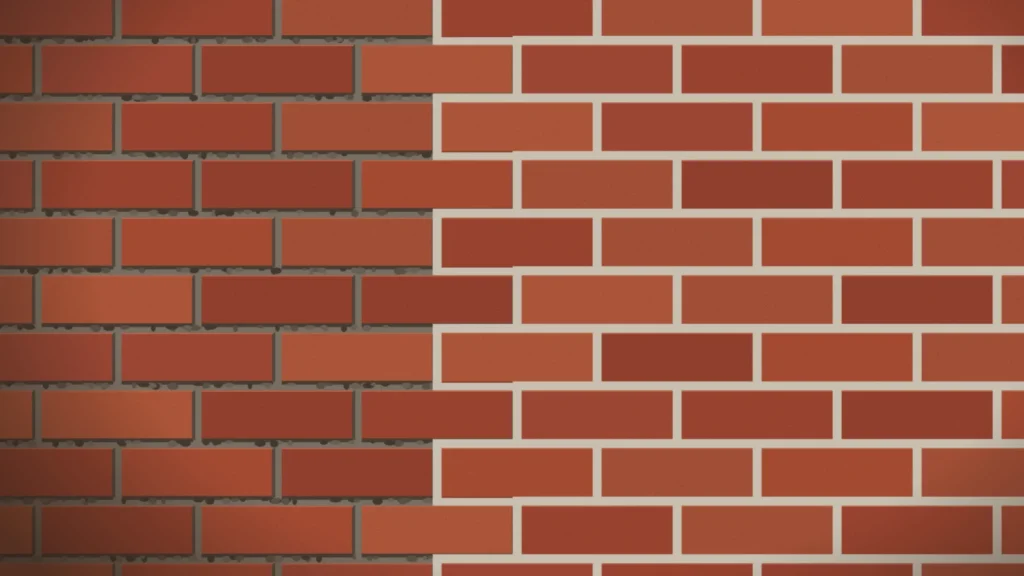
Quick answerTuckpointing in Colorado Springs means grinding or raking out worn mortar joints and packing them with fresh, matched mortar. You need it when joints are crumbling, recessed, cracked or pulling away from the brick. Done right, it keeps water out of the wall and stops freeze-thaw from breaking down the brick around the joints.
Mortar is meant to wear out before the brick does. It is the softer, sacrificial part of a wall, and after enough winters it erodes, cracks and lets water in. Replacing it at the right time is one of the most useful maintenance jobs a brick home can get, and it is a big part of our brickwork and brick repair work. This guide covers the signs that your walls need it, how a mason does the work properly, why our climate is hard on mortar, and what drives the cost of a job.
What Tuckpointing Means
You will hear three words used for nearly the same job: pointing, repointing and tuckpointing. The Brick Industry Association’s guide to repointing explains that pointing is placing mortar into a prepared joint, repointing is removing defective mortar and replacing it, and tuckpointing is generally used to mean the same thing as repointing. Strictly, tuckpointing also names an old decorative style that used a thin line of contrasting mortar, but most homeowners and contractors use the word for any joint repair.
Whatever it is called, the job is the same: take out the damaged mortar to a proper depth and replace it with mortar that suits the wall. It is not smearing a thin layer of new mortar over the old joints. That kind of surface patch looks fine for a season and then pops off.
Signs Your Brick Needs Tuckpointing in Colorado Springs
Walk around the house on a dry day and look closely at the joints, especially on the sides that get the most sun, snow and runoff. These are the common signs:
- Recessed or eroded joints. The mortar has worn back from the face of the brick. The BIA guide treats erosion deeper than about a quarter inch as a sign the joint needs work.
- Crumbling mortar. Mortar that turns to sand when you scrape it with a key or screwdriver.
- Hairline cracks in the joints. Fine cracks along or across the mortar let water in.
- Gaps between mortar and brick. The mortar has pulled away from the edge of the brick.
- Missing mortar. Holes or empty joints, often at corners, under windowsills and near downspouts.
- Loose bricks. A brick that moves when you push it has lost its bond.
- Damp inside. Stained or damp interior walls, peeling paint or crumbling plaster on the inside of an exterior wall.
- White staining. Efflorescence, the white powdery deposit left as water moves through the wall.
If you see these together with flaking or broken brick faces, read our guide to spalling brick repair, since failed joints and spalling usually come from the same water problem. Our checklist of warning signs your brick needs repair covers the rest.
Why Mortar Wears Out Faster Here
Colorado Springs is hard on mortar joints for a few reasons:
- Freeze-thaw cycles. Sunny afternoons melt snow against walls and chimneys, and the water freezes again overnight. Water that soaks into an open joint expands as it freezes and breaks the mortar apart a little more each time.
- Strong sun at altitude. South and west walls heat and cool fast, which works joints back and forth.
- Wind-driven snow and rain. Storms push moisture sideways into walls that are rarely wet in milder climates.
- Poor drainage. Overflowing gutters, short downspouts and splashback at the base of the wall keep the same joints wet over and over.
That is why the base of walls, chimneys, parapets, steps and anything under a dripping gutter usually need tuckpointing first. For more on protecting brick through the cold months, see our guide to winter masonry care in Colorado Springs.
The Tuckpointing Process, Step by Step
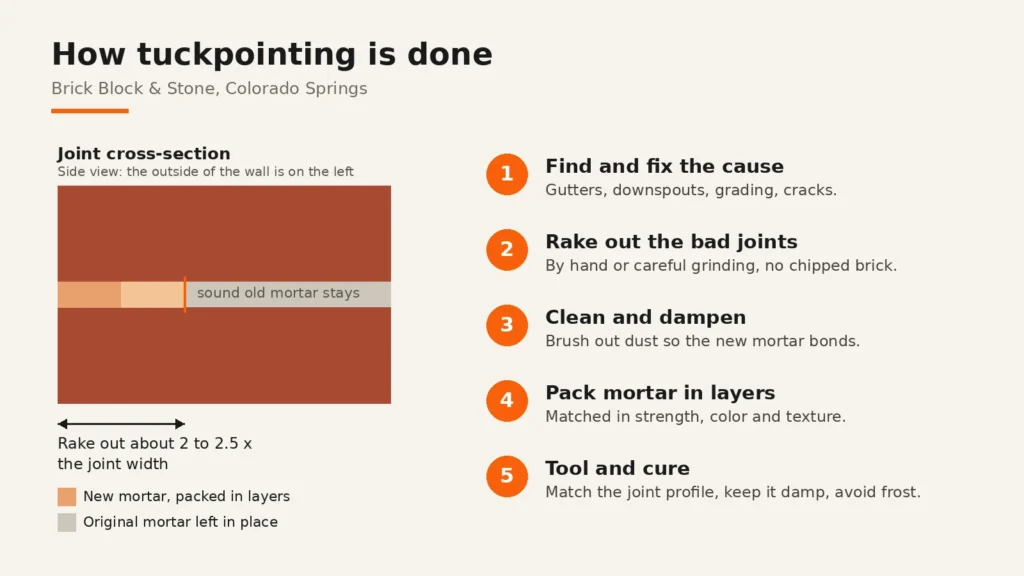
Good tuckpointing is slow, careful work. Here is how a mason approaches a typical job.
1. Inspect the wall and fix the cause
The National Park Service’s Preservation Brief 2 on repointing makes a point every mason should follow: find out why the mortar failed before replacing it. Leaking gutters, settlement cracks or water running down the wall will ruin new mortar just as they ruined the old. A mason also decides which joints actually need work. Sound joints are better left alone.
2. Remove the damaged mortar
Defective mortar is raked or cut out to a consistent depth. The NPS brief recommends removing mortar to about two to two and a half times the width of the joint, which for most brick joints is roughly half an inch to an inch. Shallow removal is the most common shortcut, and it is why some repairs fall out within a year or two. Removal should not chip the edges of the brick or widen the joints, so careful hand tools or a skilled operator with a grinder matter here.
3. Clean and dampen the joints
Dust and loose debris are brushed or blown out so the new mortar bonds to the old mortar and the brick. The joints are then dampened, because dry brick pulls water out of fresh mortar too fast and weakens it.
4. Pack in matching mortar, in layers
Choosing the mortar is the most important decision in the job. Both the BIA and the NPS say the new mortar should not be stronger or harder than the original mortar or the brick. A harder mortar does not flex with the wall, so stress moves into the brick and the brick faces crack and spall. Older homes often need a softer, lime-rich mix. Sand color and texture are matched so the repair blends in. Deep joints are filled in layers, each pressed in firmly, rather than in one thick fill.
5. Tool the joints and let them cure
When the mortar is firm enough, each joint is tooled to match the existing profile, whether that is concave, flat, raked or something else. Timing matters: tooling too early or too late changes the color and the seal. The fresh mortar is then kept damp and protected from hard sun and frost while it cures. In Colorado Springs that means watching the forecast closely in spring and fall.
Tuckpointing in Colorado Springs Weather: When to Do It
Mortar needs time above freezing to cure properly. Spring, early summer and early fall are usually the best windows here, when days are mild and overnight frost is not a risk. Midsummer work on a sunny wall needs shade and extra misting so the mortar does not dry too fast. Winter tuckpointing is possible only with cold-weather precautions such as heated enclosures, and many jobs are better scheduled for spring. If you notice failing joints in late fall, a temporary fix for active leaks and a planned repair once the weather warms is often the sensible route.
Can You Tuckpoint Brick Yourself?
A homeowner can repoint a few small joints on a garden wall or planter with patience and the right mortar. Larger jobs are a different matter. The hard parts are cutting out mortar without damaging the brick, getting the depth right, choosing a mortar that will not harm the brick, and matching the color and joint profile so the repair does not stand out. Work on chimneys and high walls also brings ladder and roof safety into it. Mistakes are hard to undo, because a too-strong mortar or chipped brick edges stay with the wall for decades.
What Affects Tuckpointing Cost in Colorado Springs
There is no single price for tuckpointing, because every wall is different. These are the things that move the cost up or down:
- Area. How many square feet of wall need repointing, and whether it is a section or a whole elevation.
- Joint condition and depth. Deeply eroded joints take longer to clean out and fill.
- Joint width and brick type. Narrow joints and soft or historic brick need slower, more careful work.
- Mortar matching. Custom color matching or lime mortars for older homes add time.
- Height and access. Chimneys, second stories and walls behind landscaping may need scaffolding or lifts.
- Related repairs. Replacing cracked or spalled bricks, fixing flashing or dealing with drainage at the same time.
- Cleaning. Removing old patches, paint or staining before or after the work.
The way to know your number is an on-site look. Every one of our estimates is free, written, and lists which joints need work and why.
How Long Tuckpointing Lasts
Well-done repointing with a matched mortar, at the right depth, can last for many years. The NPS brief notes that if the original joints lasted a long time, careful repointing should too. What shortens its life is the same list that wore out the first mortar: water from bad gutters and drainage, shallow repairs, the wrong mortar, and work done in freezing weather. Keeping water off the wall is the best way to protect the investment.
Frequently Asked Questions
What is the difference between tuckpointing and repointing?
For most homeowners there is no practical difference. Both mean removing damaged mortar and replacing it with fresh mortar. Tuckpointing originally described a decorative style with a thin contrasting line of mortar, but today the word is commonly used for any joint repair. Ask your mason exactly what they will remove and replace.
How do I know if my brick needs tuckpointing?
Look for mortar that has worn back from the brick face, crumbles when scraped, has cracks, or has pulled away from the brick edges. Loose bricks, white staining and damp spots on inside walls are other signs. Check the base of walls, chimneys and areas under gutters first, since they usually fail first.
Can tuckpointing be done in winter in Colorado Springs?
Fresh mortar must not freeze while it cures, so winter work needs cold-weather precautions such as heated enclosures. Many jobs are better scheduled for spring or early fall. If you have an active leak in winter, a mason can suggest a temporary fix and plan the full repair for milder weather.
Why shouldn’t new mortar be harder than the old mortar?
Mortar should be the weaker part of the wall. If new mortar is harder than the brick or the original mortar, it does not give as the wall moves with temperature and moisture. The stress goes into the brick instead, and the brick faces can crack or spall. That damage is far harder to fix than joints.
How deep should mortar be removed for tuckpointing?
Guidance from the National Park Service is to remove mortar to about two to two and a half times the joint width, roughly half an inch to an inch for most brick. Any loose mortar deeper than that should also come out. Shallow repairs are a common reason new mortar falls out early.
Book a Tuckpointing Estimate in Colorado Springs
Catching worn joints early protects the brick and the inside of your home, and it keeps the repair small. Brick Block & Stone brings 40+ years of masonry experience to tuckpointing in Colorado Springs and offers free written estimates. Contact us or call 719-723-1081 to have your brick and mortar checked.

Brick Block & Stone is a masonry contractor in Colorado Springs with more than 40 years of experience in brick, block, stone, pavers and retaining walls. Questions about your own project? Call 719-723-1081 or send us a message.
