In this article 12 sections
- 1Why Winter Is Hard on Masonry in Colorado Springs
- 2Before the Snow: Fall Prep Checklist
- 3Snow Removal Around Brick, Stone and Block
- 4Ice Melt and Masonry: What to Use and What to Avoid
- 5Chimneys and Fireplaces in Winter
- 6Retaining Walls, Steps and Foundations
- 7Warning Signs to Watch for This Winter
- 8Can Masonry Be Repaired in Winter?
- 9What Affects the Cost of Winter Masonry Repairs
- 10Spring Checkup After the Thaw
- 11Frequently Asked Questions
- 12Get Your Masonry Ready for Winter
Quick answerWinter masonry care in Colorado comes down to keeping water out of brick, block and stone before it freezes. Clear snow away from walls, steps and chimneys, keep gutters and downspouts flowing, use ice melt sparingly, and fix open joints and cracks before hard freezes start. Most winter damage starts as water that sat too long.
Colorado Springs winters are hard on masonry in a specific way. We get snow, then sun, then a hard freeze the same night. That pattern soaks walls and steps in the afternoon and freezes them after dark, over and over, from fall into spring. The good news is that most of what protects your brick, stone and block is simple routine. This guide covers what to do before the snow, during the winter and once it melts, plus the warning signs that need a mason.
Why Winter Is Hard on Masonry in Colorado Springs
Brick, concrete block, stone and mortar all have pores. They take on a little water and dry out again, and that is normal. The damage starts when water sits in the masonry and freezes. Ice takes up more room than water, so it pushes from inside. Each freeze widens tiny cracks a little more.
Three local conditions make it worse:
- Frequent freeze-thaw cycles. Our sunny winter days melt snow on ledges, steps and wall caps, and the meltwater freezes again overnight.
- Expansive clay soils. Many neighborhoods sit on clay that swells when wet and shrinks when it dries or freezes, which moves retaining walls, steps and block foundations.
- Snow piles and ice melt. Shoveled snow piled against a wall keeps it wet for weeks, and deicing salts add their own pressure as they dry inside masonry.
Before the Snow: Fall Prep Checklist
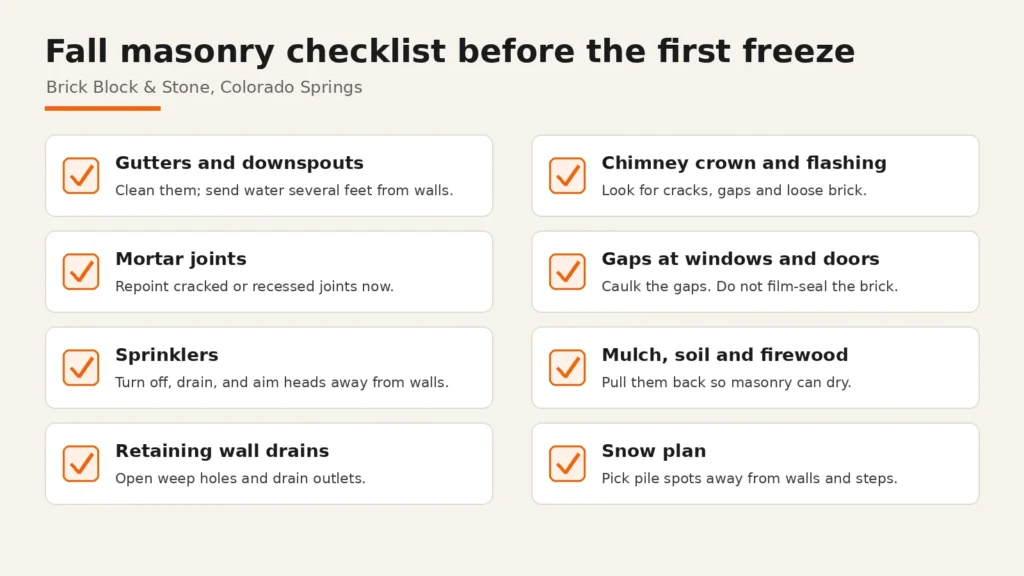
The best winter masonry care happens in October and November, before the first big storm. Walk around the house and the yard with this list:
- Clean gutters and check downspouts. Make sure every downspout empties several feet away from brick walls, steps and retaining walls, not against them.
- Look at the chimney from the ground. Missing mortar, a cracked crown, loose bricks or damaged flashing all let water in. Binoculars help.
- Check mortar joints. Joints that are recessed, crumbling or cracked will take on water. Small areas are a quick repair before winter, and much harder once it freezes.
- Seal the gaps, not the brick. Caulk where brick meets windows, doors and trim. Do not paint or film-seal the brick itself, since that can trap moisture.
- Turn off and drain sprinklers. Heads that spray walls keep the lower courses wet going into the first freeze.
- Pull back mulch, soil and firewood. Masonry should not sit in wet material all winter.
- Check retaining wall drainage. Make sure weep holes and drain outlets are open, and that water is not ponding at the top or base of the wall.
Snow Removal Around Brick, Stone and Block
How you move snow matters as much as how often. A few habits go a long way:
- Shovel early. Snow that is packed down by foot traffic turns to ice, and ice is what tempts people to reach for salt.
- Use a plastic shovel or one with a rubber edge on brick steps, stone walks and pavers. Metal blades chip edges and caps.
- Pile snow away from walls. Do not bank snow against the house, a retaining wall or a brick planter. As it melts, it soaks the same masonry for days.
- Keep snow off wall caps and steps. Brush it off rather than chipping ice with a shovel or ice chopper.
- Watch roof edges. Ice dams and dripping eaves can soak the brick below them every afternoon. If icicles keep forming over the same spot, look at that wall in spring.
If you hire plow or shovel crews, ask them to keep snow storage off retaining walls and away from brick walls and steps. A plowed pile on top of a retaining wall adds weight and soaks the soil behind it when it melts.
Ice Melt and Masonry: What to Use and What to Avoid
Ice melt is where a lot of avoidable damage happens. Salt lowers the freezing point of water, which melts ice, but it also lets more water soak into masonry and leaves salts behind as it dries. Those salts crystallize inside the pores and push on them the same way ice does.
The University of Maryland Extension’s guide to melting ice safely advises against using sodium chloride or calcium chloride on brick or stone, and notes that overusing deicers can speed up freeze-thaw damage. Its comparison also shows how much the working temperature varies: rock salt stops being useful around 18°F, while magnesium chloride and calcium chloride work in much colder weather.
For winter masonry care around a Colorado home, these rules keep you safe on the walk without hurting the brick:
- Shovel first and use ice melt only on ice that is left, and only where people walk.
- Keep any ice melt off brick steps, stone, mortar joints and wall faces.
- Use sand or another non-melting traction grit on brick and stone steps when you can.
- Use the least product that works, and sweep up leftover granules once the ice is gone.
- Never use ice melt on new concrete or fresh mortar in its first winter.
- Rinse salt residue off steps, walks and the bottom of walls in spring.
- Check the label of any product for what surfaces it is approved for.
Pavers have their own rules, which depend on the paver and the joint sand. We will cover paver snow removal in detail in a separate guide.
Chimneys and Fireplaces in Winter
The chimney takes more weather than any other masonry on the house. It sticks up above the roof, it is wet on top every time it snows, and in winter it heats and cools every time you use the fireplace.
- A cracked crown lets water straight down into the brick. Small hairline cracks can sometimes be sealed with a crown repair product; large cracks or a crumbling crown should be rebuilt.
- Flashing where the chimney meets the roof should be tight. Water stains on the ceiling or walls near the chimney are a warning sign.
- Spalled or loose bricks near the top of the chimney can fall. Do not wait on that.
- A chimney cap keeps snow and rain out of the flue.
If you see flaking brick on the chimney, read our guide on spalling brick and how freeze-thaw damages brick. Our fireplace and chimney masonry work covers crowns, rebuilds and repairs.
Retaining Walls, Steps and Foundations
Retaining walls
Winter is when drainage problems behind a retaining wall show up. Water that cannot drain freezes in the soil and pushes on the wall. Keep drain outlets open, keep snow piles off the top of the wall, and watch for new leaning or bulging after a thaw. Our guide to retaining wall repair in Colorado Springs explains the warning signs.
Brick and stone steps
Steps take foot traffic, shovels and ice melt all winter. Loose treads, open joints and hollow-sounding bricks get worse fast once water gets under them. Fix them before winter if you can, and keep salt off them.
Block foundations and walls
Clay soil that freezes and swells can push on block foundations and garden walls. Keep downspouts and grading moving water away from the house, and note any new stair-step or horizontal cracks so a mason can look at them.
Warning Signs to Watch for This Winter
Take a quick walk around after big storms and after a long thaw. Call a mason if you see:
- Brick faces flaking, peeling or popping off.
- Mortar falling out of joints, or sand-like debris at the base of walls.
- New cracks in brick, block or stone, especially stair-step or horizontal cracks.
- A retaining wall that is leaning more, bulging or has loose cap stones.
- White salt staining (efflorescence) spreading on a wall, which means water is moving through it.
- Loose bricks on the chimney, a cracked crown or water stains inside near the chimney.
- Steps or walks with loose, rocking or sunken units.
Can Masonry Be Repaired in Winter?
Yes, with care. Inspections, estimates and planning can happen anytime. Mortar and new masonry need protection while they cure, because water in fresh mortar that freezes weakens it.
The Brick Industry Association’s Technical Note 1 on hot and cold weather construction treats anything below 40°F as cold weather for masonry work. It calls for covering new work, using heated materials, insulating blankets or heated enclosures as the temperature drops, and never laying units that are frozen or have ice on them. In practice, that means small repairs get scheduled for mild stretches, and bigger jobs either get proper cold-weather protection or wait for spring.
An emergency, like a chimney with loose bricks or a wall that is moving near a walkway, should be checked right away no matter the season.
What Affects the Cost of Winter Masonry Repairs
We give a free written estimate after we see the job. These factors change the scope:
- Type and size of the repair. Repointing a few joints is very different from rebuilding a chimney crown or a section of wall.
- Weather protection. Tarps, blankets or heated enclosures add time and materials when it is cold.
- Access. Chimney and roof work needs ladders and fall protection; snow and ice can slow access.
- Hidden damage. Water damage behind a face or under steps is often bigger than it looks from outside.
- Drainage fixes. Gutters, downspout extensions, grading and wall drains are often part of a lasting repair.
- Timing. Waiting for spring can work for cosmetic issues but costs more when water keeps getting in all winter.
Spring Checkup After the Thaw
Once the snow is gone, do one more walk-around. Rinse salt off steps, walks and the base of walls with plain water. Look for new spalling, cracks and missing mortar, and check that retaining walls and steps did not move. Spring is a good time to book repointing and repairs, before the next round of freeze-thaw. Our brickwork services and other masonry services cover everything from small repairs to full rebuilds.
Frequently Asked Questions
Is ice melt safe for brick?
Most salt-based ice melt is hard on brick, stone and mortar. Salts soak in with the meltwater and crystallize inside as they dry, which adds to freeze-thaw damage. Shovel first, use sand for traction on brick and stone steps, keep products off walls and joints, and rinse residue off in spring.
How do I protect my chimney in winter?
Check the crown, flashing and top courses of brick in the fall, and fix cracks before the snow. Add a chimney cap if you do not have one. If you see flaking bricks, loose mortar or water stains near the chimney inside, have it looked at, since chimney damage gets worse quickly in freeze-thaw weather.
Should I seal my brick before winter?
Usually no. Film-forming sealers and paint can trap moisture in brick, which makes freeze-thaw damage worse. It is better to fix the water sources: gutters, downspouts, flashing, cracked crowns and open joints. A breathable water repellent is sometimes used for a specific problem after a mason has looked at the wall.
Can snow piled against a wall damage it?
Yes. Snow banked against brick, stone or block keeps it wet for days or weeks as it melts, and that is exactly what freeze-thaw needs. On a retaining wall, snow piled on top adds weight and soaks the soil behind it. Pile snow on the lawn or in open areas away from masonry.
When is the best time to repair masonry in Colorado Springs?
Spring through fall is easiest, because mortar needs temperatures above freezing to cure. Small repairs can be done on mild winter days, and larger work can be done in cold weather with covers and heat. Fall is the best time for repairs that keep water out before winter starts.
Get Your Masonry Ready for Winter
Good winter masonry care in Colorado means keeping water out, keeping snow and salt off, and fixing small problems before they freeze. If you want a second set of eyes on your chimney, walls or steps, Brick Block & Stone has more than 40 years of masonry experience in Colorado Springs and offers free written estimates. Call 719-723-1081 or contact us online.

Brick Block & Stone is a masonry contractor in Colorado Springs with more than 40 years of experience in brick, block, stone, pavers and retaining walls. Questions about your own project? Call 719-723-1081 or send us a message.
